The Power of Movement: How Exercise Can Transform Colon Cancer Survival

Feb 25, 2025 By Eric Ward

In the face of a colon cancer diagnosis, the journey to recovery often feels daunting and overwhelming. Patients grapple with the physical toll of treatment, the emotional weight of uncertainty, and the profound disruption to their everyday lives. However, a recent study published in *Cancer*, a journal of the American Cancer Society, offers a glimmer of hope and empowerment. The research suggests that something as accessible and controllable as exercise can significantly impact survival rates and quality of life for colon cancer patients. This finding not only provides a tangible action for patients but also underscores the profound interplay between lifestyle choices and health outcomes.


Dr. Justin Brown, the lead study author and an associate professor at Louisiana State University’s Pennington Biomedical Research Center, highlights a critical reality: despite advancements in cancer treatment, survival rates for cancer patients still lag behind those of the general population. This disparity is particularly concerning as colorectal cancer is projected to become the leading cause of cancer-related deaths among younger adults (ages 20 to 49) in the United States by 2030. Against this backdrop, the study’s findings offer a powerful message: engaging in physical activity after a colon cancer diagnosis can not only extend life expectancy but, in some cases, bring survival rates on par with or even surpass those of the general population without cancer.


The study’s methodology was comprehensive and revealing. Researchers surveyed nearly 3,000 colon cancer patients about their physical activity levels during and after chemotherapy. Participants were then followed for approximately six years, allowing researchers to analyze survival outcomes against predicted lifespans based on age, sex, and year of diagnosis. The results were striking: patients who engaged in regular exercise not only lived longer but also experienced a reduced risk of cancer recurrence. This finding is particularly significant as it suggests that exercise can mitigate some of the long-term health challenges associated with cancer treatment.


Dr. Keith Diaz, an associate professor of behavioral medicine at Columbia University Medical Center, underscores the multi-faceted benefits of exercise for colon cancer patients. Exercise, he explains, improves heart health, mental health, and gut health—all of which are crucial for long-term survival. The mechanisms behind these benefits are still being explored, but evidence suggests that physical activity reduces inflammation and insulin levels, which are conducive to cancer cell growth and spread. Additionally, exercise strengthens the immune system, enhancing the body’s ability to detect and eliminate cancer cells.


The study’s findings are particularly encouraging for patients undergoing treatment and those in remission. Cancer diagnosis often leaves individuals feeling helpless and disconnected from their usual routines. However, this research highlights that small, manageable lifestyle changes can have a profound impact on health outcomes. Dr. Brown emphasizes that even modest amounts of daily physical activity, such as five to six hours of brisk walking per week, can contribute significantly to improved survival. Moreover, the more exercise one engages in, the greater the potential benefits.


The study’s observational nature means that causality cannot be definitively established. However, the consistency and strength of the findings suggest a compelling link between exercise and improved survival rates. This link is supported by a growing body of research highlighting the importance of lifestyle factors in cancer prevention and recovery. For instance, a July 2023 study demonstrated that just a minute or two of vigorous exercise, such as power walking or strenuous housework, could reduce cancer risk. Another study published in March 2023 suggested that 11 minutes of moderate to vigorous activity daily could lower the risk of various diseases, including cancer.


The implications of these findings extend beyond individual patients. They offer a powerful message of hope and agency to cancer survivors and their loved ones. A cancer diagnosis is often perceived as a life-altering and irreversible event, but this research underscores that there are tangible steps individuals can take to reclaim control over their health. Exercise, in this context, is not just a physical activity; it is a tool for empowerment, a means of reclaiming agency, and a pathway to improved well-being.


Moreover, the study’s findings have broader public health implications. As colorectal cancer rates rise among younger populations, the need for effective, accessible interventions becomes increasingly urgent. Exercise, being a low-cost and widely accessible option, offers a practical solution that can be integrated into daily life. Public health initiatives and cancer support programs can leverage these findings to encourage physical activity as a standard component of cancer care and recovery.


However, questions remain about the optimal type, intensity, and duration of exercise for maximum benefit. Future research should focus on identifying personalized exercise regimens that can be tailored to individual patients’ needs and capabilities. Additionally, further studies should explore the long-term effects of exercise on cancer recurrence and overall health outcomes. The potential for exercise to not only extend life but also enhance its quality is a promising avenue for future investigation.


In conclusion, the study published in *Cancer* offers a powerful reminder of the transformative potential of exercise in the context of colon cancer. It highlights that even small, incremental changes in physical activity can have a profound impact on survival rates and quality of life. For cancer patients and survivors, this research is a beacon of hope, underscoring that a diagnosis does not define one’s future. Instead, it presents an opportunity to take control through lifestyle choices that can lead to healthier, longer lives. As we continue to explore the intricate connections between lifestyle and health, the role of exercise in cancer recovery stands as a testament to the power of movement and the resilience of the human spirit.


Recommend Posts
Health

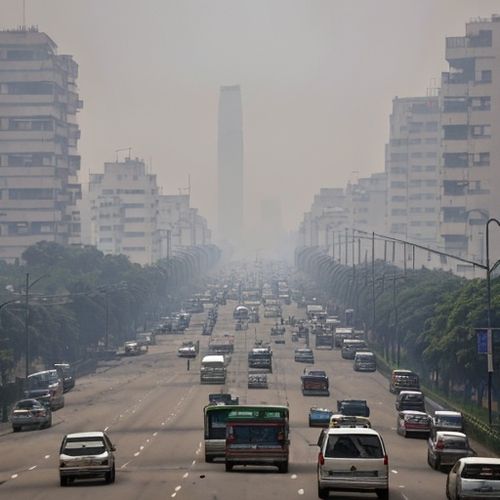
Delhi's Toxic Air: 10-Year Study Reveals Permanent Lung Damage in 53% of Residents

By Daniel Scott/Apr 4, 2025

In the smog-choked streets of India's capital, a groundbreaking medical study has uncovered an invisible public health catastrophe—the first conclusive evidence that Delhi's air pollution doesn't just sicken, but permanently rewires respiratory systems. Tracking 5,800 residents since 2013, the Delhi Respiratory Health Project found that long-term exposure to PM2.5 levels averaging 15 times WHO limits causes irreversible lung function impairment comparable to smoking a pack daily for 30 years. Published in The Lancet Planetary Health, these findings reveal how the city's air is reshaping human biology, with children showing the most alarming adaptations to their toxic environment.
Health

South Korea's Seafood Radiation Monitoring Intensifies Amid Japan's Treated Water Release

By James Moore/Apr 4, 2025

Along the jagged coastline of South Korea's East Sea, a high-tech surveillance operation is unfolding that could determine the fate of the nation's $3.8 billion seafood industry. Since Japan's controversial release of treated wastewater from Fukushima began in August 2023, Korean marine inspectors have conducted over 15,000 radiation tests on seafood—implementing what experts call the world's most stringent screening protocol for radioactive contamination in fisheries. The latest data reveals a complex picture: while no samples have exceeded safety limits, trace amounts of tritium (a radioactive hydrogen isotope) detected in 3% of deep-sea catches have ignited both scientific debate and consumer panic in equal measure.
Health

Brazil's Radical Experiment: Integrating Rainforest Tribal Medicine Into National Healthcare

By Thomas Roberts/Apr 4, 2025

Deep in the Amazon, a quiet revolution is unfolding as Brazil becomes the first nation to systematically incorporate indigenous healing traditions into its public health system. This groundbreaking initiative, launched in 2023 after a decade of advocacy by tribal leaders, recognizes traditional medicine practitioners as licensed healthcare providers and funds the cultivation of medicinal plants in protected forest areas. The program represents both an unprecedented validation of indigenous knowledge and a complex challenge to Western medical orthodoxy—all while racing against the clock as deforestation and cultural erosion threaten to wipe out ancient healing practices before they can be preserved.
Health

Saudi Arabia's $20 Billion "Medical City" Vision: Ambitious Leap or Overreach?

By Michael Brown/Apr 4, 2025

As Saudi Arabia pours unprecedented resources into its NEOM Health, Biotechnology, and Life Sciences initiative—the crown jewel of its Vision 2030 healthcare transformation—global experts are divided on whether this desert megaproject represents medical innovation's future or a cautionary tale of overambitious planning. The planned 3,800-acre medical city, with its promised AI-driven hospitals, gene-editing research hubs, and robotic surgery centers, aims to position the Kingdom as a global healthcare destination by 2032. Yet beneath the gleaming renderings lie fundamental questions about feasibility, sustainability, and the ethics of medical tourism at scale.
Health

NHS Digital Prescription System Breach Exposes Critical Cybersecurity Gaps in UK Healthcare

By William Miller/Apr 4, 2025

A massive data breach in the UK's National Health Service (NHS) electronic prescription service has compromised the sensitive medical information of over 1.2 million patients, raising urgent questions about cybersecurity preparedness in critical healthcare infrastructure. The incident, detected in late June 2024 but originating from vulnerabilities existing since 2022, allowed unauthorized access to prescription histories, including medications for mental health conditions, HIV treatments, and gender-affirming care—precisely the type of data requiring the highest protection.
Health

Africa's Malaria Vaccine Rollout Exposes Deepening Equity Divide

By Olivia Reed/Apr 4, 2025

The African Union's ambitious campaign to distribute the groundbreaking RTS,S malaria vaccine has ignited fierce debates about health equity across the continent, revealing troubling disparities in access to lifesaving prevention. While the World Health Organization's 2021 endorsement of the first-ever malaria vaccine promised relief for a region suffering 95% of global malaria deaths, the rollout has become mired in logistical challenges and allocation disputes that mirror broader global health inequities.
Health

India's Universal Health Coverage Scheme Shows Promise in Reducing Maternal Mortality, But Challenges Remain

By John Smith/Apr 4, 2025

India's ambitious Ayushman Bharat-Pradhan Mantri Jan Arogya Yojana (AB-PMJAY), the world's largest government-funded healthcare program, has made significant strides in reducing maternal mortality rates since its 2018 launch. Recent data from the Ministry of Health and Family Welfare reveals a 22% decline in maternal deaths between 2018 and 2023, with the most dramatic improvements seen in traditionally underserved states like Uttar Pradesh and Bihar. This progress comes as the scheme provides cashless coverage for maternal healthcare services to over 500 million beneficiaries, particularly targeting women in rural areas who previously faced catastrophic out-of-pocket expenses for childbirth and prenatal care.
Health

Japan's Fiscal Dilemma: The Cost of Universal Depression Screening in Annual Health Checks

By Emily Johnson/Apr 4, 2025

In a bold move to address its escalating mental health crisis, Japan has become the first major economy to mandate depression screening as part of routine annual physical examinations. The policy, which took effect in April 2024, represents a significant shift in how the nation approaches mental healthcare, traditionally stigmatized in Japanese society. However, as the government begins implementing this ambitious program, questions emerge about its financial sustainability and practical effectiveness in combating the country's alarming rates of depression and suicide.
Health

EU's Free Universal HPV Vaccination Plan Faces Implementation Challenges

By Sarah Davis/Apr 4, 2025

The European Union's ambitious plan to provide free HPV vaccinations to all citizens is encountering significant roadblocks, despite its potential to drastically reduce cervical cancer rates and other HPV-related diseases across the continent. Announced in 2023 as part of Europe's Beating Cancer Plan, the initiative aimed to eliminate structural and financial barriers to vaccination, particularly for underserved groups. However, one year into the rollout, disparities in healthcare infrastructure, vaccine hesitancy, and logistical hurdles have slowed progress, leaving many member states struggling to meet targets.
Health

U.S. CDC Enhances COVID-19 Variant Surveillance: Key Updates and Implications

By Natalie Campbell/Apr 4, 2025

As the COVID-19 pandemic continues to evolve, the U.S. Centers for Disease Control and Prevention (CDC) has unveiled an upgraded system for tracking emerging variants, aiming to stay ahead of viral mutations that could threaten public health. The new surveillance framework, announced in late 2024, integrates advanced genomic sequencing, real-time data sharing, and improved international collaboration to detect and respond to novel strains more efficiently. This overhaul comes amid concerns over the potential for immune-evading variants and the need for proactive measures to guide vaccine updates and public health strategies.
Health

Global Antibiotic Resistance Action: Key Findings from WHO’s 2024 Progress Report

By Ryan Martin/Apr 4, 2025

The World Health Organization (WHO) has released its 2024 progress report on the Global Action Plan on Antimicrobial Resistance (AMR), offering a comprehensive evaluation of global efforts to combat one of the most pressing public health threats of our time. The report highlights both advancements and persistent gaps in addressing antibiotic resistance, underscoring the urgent need for coordinated action across nations. With drug-resistant infections projected to cause millions of deaths annually by 2050 if left unchecked, the findings serve as a critical roadmap for policymakers, healthcare professionals, and the public.
Health

The Alchemy of Curiosity and Creativity: Transforming Anxiety in a Turbulent World

By Grace Cox/Feb 25, 2025

In an era marked by gun violence, climate chaos, political polarization, and an ever-present digital landscape that seems to hijack our minds, anxiety has become the defining emotion of our time. It is a shadow that looms over our daily lives, fueled by the relentless barrage of threats and uncertainties that define modern existence. Yet, amidst this maelstrom of fear, sociologist and best-selling author Martha Beck offers a glimmer of hope. Her journey to understand and manage her own anxiety has led her to a profound discovery: curiosity and creativity can act as powerful antidotes to the pervasive unease that grips our collective psyche.
Health

The Power of Movement: How Exercise Can Transform Colon Cancer Survival

By Eric Ward/Feb 25, 2025

In the face of a colon cancer diagnosis, the journey to recovery often feels daunting and overwhelming. Patients grapple with the physical toll of treatment, the emotional weight of uncertainty, and the profound disruption to their everyday lives. However, a recent study published in *Cancer*, a journal of the American Cancer Society, offers a glimmer of hope and empowerment. The research suggests that something as accessible and controllable as exercise can significantly impact survival rates and quality of life for colon cancer patients. This finding not only provides a tangible action for patients but also underscores the profound interplay between lifestyle choices and health outcomes.
Health

The Rising Visibility of LGBTQ+ Identities: A Reflection of Progress and a Call for Continued Advocacy

By Eric Ward/Feb 25, 2025

In the tapestry of American society, the LGBTQ+ community has long been an integral yet often marginalized thread. However, recent findings from a Gallup Poll reveal a significant shift in the visibility and identification of LGBTQ+ individuals, highlighting both the progress made and the challenges that remain. According to the poll released in 2024, 9.3% of American adults now identify as LGBTQ+, marking an increase of over 1 percentage point from 2023 and nearly doubling since 2020. This surge underscores a broader trend of growing visibility and acceptance, but it also serves as a reminder of the ongoing struggle for equality and understanding.
Health

The Resurgence of Measles: A Call to Action in the Face of an Outbreak

By Ryan Martin/Feb 25, 2025

In the heart of West Texas, a troubling outbreak of measles has captured the attention of public health officials, local communities, and the nation at large. The Texas Department of State Health Services has reported a total of 58 confirmed cases linked to this outbreak, with the majority centered in Gaines County, which alone has seen 45 cases. Surrounding areas, including Terry County with nine cases, Yoakum County with two, Lynn County with one, and Lubbock County with one, have also witnessed the spread of this highly contagious illness. The cases predominantly affect children aged 5 to 17, a demographic particularly vulnerable to the severe complications that measles can bring.
Health

The Invisible Threat: Windborne Spread of Bird Flu and the Quest for Understanding

By Victoria Gonzalez/Feb 25, 2025

In the quiet fields of the Czech Republic, a mystery unfolded in February 2024 that would capture the attention of veterinarians, virologists, and public health experts worldwide. A highly secure chicken farm, renowned for its state-of-the-art biosecurity measures and specialized breeding program, was struck by a devastating outbreak of the highly pathogenic H5N1 virus. This was no ordinary farm; it was a fortress against disease, with filtered water, one-way airflow systems, and stringent protocols to keep wild animals at bay. Yet, somehow, the virus had infiltrated, leaving researchers puzzled and scrambling for answers.
Health

Navigating the Complex Landscape of Antidepressants and Dementia: A Cautionary Tale of Interpretation and Public Perception

By Jessica Lee/Feb 25, 2025

In the intricate tapestry of dementia care, antidepressants have long been a cornerstone in managing the emotional and psychological turmoil that often accompanies this devastating condition. Depression, anxiety, and agitation are frequent companions of dementia, and antidepressants have been employed as a vital tool to alleviate these symptoms and improve patients' quality of life. However, a recent study suggesting that antidepressants may accelerate cognitive decline in individuals with dementia has sparked a wave of concern, debate, and cautionary calls from experts. As we delve into the nuances of this study, it is crucial to examine the implications, limitations, and potential consequences of such findings on both clinical practice and public perception.
Health

The Quest for Clarity: Navigating the New Frontier of "Healthy" Food Labeling

By David Anderson/Feb 25, 2025

In the labyrinthine world of food regulation, where scientific advancements and consumer demands constantly evolve, the quest for defining what truly constitutes a "healthy" food has long been a contentious and complex endeavor. The US Food and Drug Administration's (FDA) recent update to the criteria for labeling foods as "healthy" is a significant stride forward, yet its delayed implementation underscores the intricate dance between regulatory necessity and political realities. As we navigate this new landscape, it is essential to understand the implications of these changes, the rationale behind the delay, and the broader impact on public health and consumer trust.
Health

The Lurking Menace of Listeria: A Call to Vigilance in Food Safety

By Ryan Martin/Feb 25, 2025

In the intricate web of modern food supply chains, where products traverse vast distances and touch countless lives, the specter of foodborne illness remains an ever-present threat. The recent outbreak of Listeria monocytogenes infections linked to frozen supplemental shakes serves as a stark reminder of the vulnerabilities that exist within our food systems and the critical importance of unwavering vigilance in safeguarding public health.