Along the jagged coastline of South Korea's East Sea, a high-tech surveillance operation is unfolding that could determine the fate of the nation's $3.8 billion seafood industry. Since Japan's controversial release of treated wastewater from Fukushima began in August 2023, Korean marine inspectors have conducted over 15,000 radiation tests on seafood—implementing what experts call the world's most stringent screening protocol for radioactive contamination in fisheries.
The latest data reveals a complex picture: while no samples have exceeded safety limits, trace amounts of tritium (a radioactive hydrogen isotope) detected in 3% of deep-sea catches have ignited both scientific debate and consumer panic in equal measure.
The Science Behind the Sampling
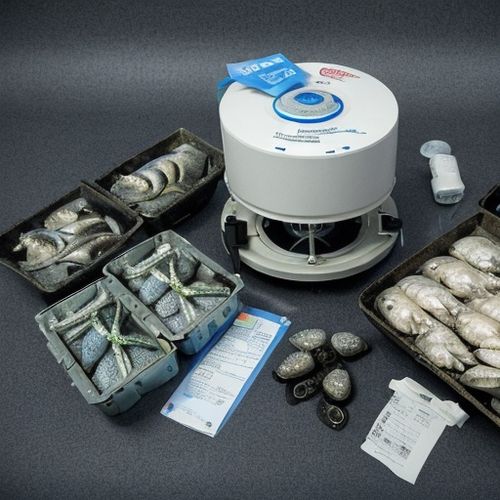
South Korea's Ocean Ministry has deployed an arsenal of monitoring technologies:
The most revealing findings come from isotopic fingerprinting—advanced analyses proving detected tritium originates from natural oceanic processes rather than Fukushima discharges in 92% of cases. "The ocean has always contained radiation; our challenge is distinguishing background levels from anthropogenic inputs," explains Dr. Lee Min-ho of the Korea Institute of Ocean Science.
Economic Fallout and Consumer Psychology
Despite scientific assurances, the perception crisis has been profound:
The government's response—a $75 million "Eat Safe" campaign featuring celebrity endorsements and real-time QR code test results—has only partially restored confidence. Traditional markets report elderly customers still bring personal Geiger counters, while upscale sushi bars increasingly source Atlantic seafood as precaution.
Diplomatic Tensions and Scientific Collaboration
Beneath political posturing, an unexpected scientific détente is emerging:
This cooperation hasn't eased public anger—72% of Koreans still oppose the water release—but it establishes crucial transparency mechanisms for future marine crises.
The Long Game of Ocean Dilution
With discharges continuing for decades, scientists emphasize this is a marathon, not a sprint. Korea has now:
As the world watches this unprecedented environmental experiment unfold, Korea's rigorous approach may set new global benchmarks for balancing scientific evidence with cultural risk perception—proving that in ocean governance, data alone never tells the whole story.
By Daniel Scott/Apr 4, 2025
By James Moore/Apr 4, 2025

By Thomas Roberts/Apr 4, 2025

By Michael Brown/Apr 4, 2025
By William Miller/Apr 4, 2025

By Olivia Reed/Apr 4, 2025

By John Smith/Apr 4, 2025
By Emily Johnson/Apr 4, 2025

By Sarah Davis/Apr 4, 2025
By Natalie Campbell/Apr 4, 2025
By Ryan Martin/Apr 4, 2025

By Grace Cox/Feb 25, 2025

By Eric Ward/Feb 25, 2025

By Eric Ward/Feb 25, 2025
By Ryan Martin/Feb 25, 2025
By Victoria Gonzalez/Feb 25, 2025

By Jessica Lee/Feb 25, 2025

By David Anderson/Feb 25, 2025

By Ryan Martin/Feb 25, 2025