Deep in the Amazon, a quiet revolution is unfolding as Brazil becomes the first nation to systematically incorporate indigenous healing traditions into its public health system. This groundbreaking initiative, launched in 2023 after a decade of advocacy by tribal leaders, recognizes traditional medicine practitioners as licensed healthcare providers and funds the cultivation of medicinal plants in protected forest areas. The program represents both an unprecedented validation of indigenous knowledge and a complex challenge to Western medical orthodoxy—all while racing against the clock as deforestation and cultural erosion threaten to wipe out ancient healing practices before they can be preserved.
Bridging Two Worlds of Healing
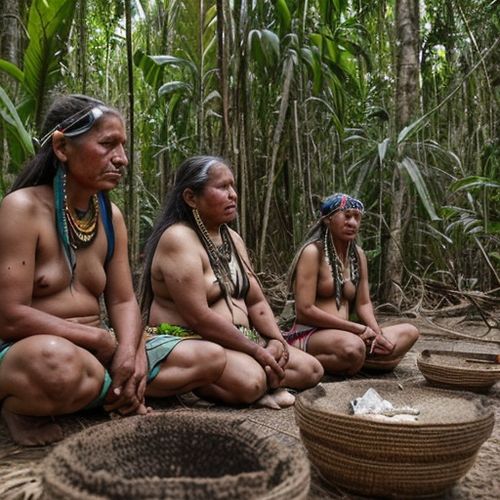
At the heart of the initiative are "intercultural health units" where shamans work alongside physicians, combining ancestral remedies with conventional treatments. In the state of Acre, the Yawanawá people's sophisticated use of sacred snuff (rapeh) for respiratory conditions is now being studied by pulmonologists, while the Huni Kuin tribe's vibrational healing ceremonies have been adapted for chronic pain management in São Paulo hospitals. Early results show promise: patient adherence to tuberculosis treatment increased by 40% when combined with traditional strengthening rituals in pilot sites. "This isn't about choosing between modern and traditional medicine," explains Dr. Maria Silva, the program's lead coordinator. "It's about creating a new paradigm where both systems enhance each other."
The Knowledge Preservation Crisis
The timing is critical. Ethnobotanists estimate that a third of Amazonian medicinal plant knowledge has been lost in the past generation alone as elders die without passing on their wisdom. The government's "Living Pharmacy" project attempts to reverse this by creating digital records of healing practices and establishing 47 protected medicinal plant reserves. Yet challenges abound: some tribes refuse to share sacred knowledge with outsiders, while scientists struggle to standardize preparations of complex plant compounds that shamans traditionally customize for each patient. The recent death of a renowned Tikuna healer took with him knowledge of 217 plant species—a stark reminder of what's at stake.
Regulatory and Scientific Hurdles
Incorporating traditional medicine into a regulated health system requires navigating uncharted territory. Brazil's health ministry has developed unique certification protocols recognizing shamans' expertise without requiring Western medical training, but quality control remains contentious. How does one standardize a healing practice that's inherently spiritual? Pharmacologists face equal challenges translating plant remedies into reproducible treatments—the same vine extract might show wildly different chemical compositions depending on which tributary it grew near. These complexities have slowed the approval process, with only 12 of 83 submitted traditional treatments cleared for clinical use so far.
Cultural Appropriation Concerns
Some indigenous leaders warn against the commodification of their sacred traditions. The Federation of Indigenous Organizations of the Brazilian Amazon has filed complaints about pharmaceutical companies patenting modified versions of tribal remedies without benefit-sharing agreements. "They take our knowledge, remove its soul, and sell it back to us," says Chief Almir Suruí. In response, Brazil has established the world's first traditional knowledge copyright system, ensuring tribes receive royalties when their remedies are commercialized. However, enforcing these protections across international borders remains problematic, as demonstrated by a recent German company's attempt to market a synthetic version of the Kaxinawá tribe's ayahuasca anti-depressant formulation.
Global Implications
Brazil's experiment is being closely watched by other biodiverse nations. The World Health Organization has designated it as a pilot for its Traditional Medicine Global Strategy, with particular interest in how the model might be adapted in Africa and Southeast Asia. Success could revolutionize healthcare access for remote communities worldwide, while failure might reinforce skepticism about integrating traditional practices. As climate change accelerates biodiversity loss, the program also represents a radical new approach to conservation—framing the Amazon not just as carbon-sequestering wilderness but as a living medical library humanity can't afford to lose.
For now, the most profound changes may be social rather than medical. In Manaus hospitals, it's becoming common to see surgeons consulting with pajés (shamans) about postoperative spiritual care, while urban Brazilians increasingly seek traditional treatments for chronic conditions unresponsive to pharmaceuticals. This cultural shift hints at a future where healthcare is no longer an either-or proposition between tradition and modernity, but a spectrum of healing possibilities—provided the rainforest's wisdom survives long enough to teach us.
By Daniel Scott/Apr 4, 2025
By James Moore/Apr 4, 2025
By Thomas Roberts/Apr 4, 2025

By Michael Brown/Apr 4, 2025
By William Miller/Apr 4, 2025
By Olivia Reed/Apr 4, 2025
By John Smith/Apr 4, 2025
By Emily Johnson/Apr 4, 2025
By Sarah Davis/Apr 4, 2025
By Natalie Campbell/Apr 4, 2025
By Ryan Martin/Apr 4, 2025

By Grace Cox/Feb 25, 2025

By Eric Ward/Feb 25, 2025
By Eric Ward/Feb 25, 2025
By Ryan Martin/Feb 25, 2025
By Victoria Gonzalez/Feb 25, 2025
By Jessica Lee/Feb 25, 2025

By David Anderson/Feb 25, 2025

By Ryan Martin/Feb 25, 2025