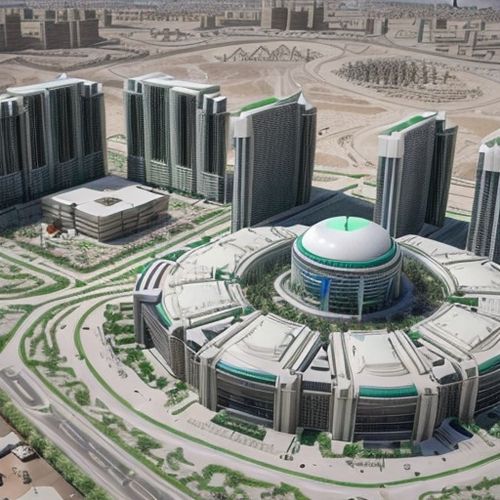
As Saudi Arabia pours unprecedented resources into its NEOM Health, Biotechnology, and Life Sciences initiative—the crown jewel of its Vision 2030 healthcare transformation—global experts are divided on whether this desert megaproject represents medical innovation's future or a cautionary tale of overambitious planning. The planned 3,800-acre medical city, with its promised AI-driven hospitals, gene-editing research hubs, and robotic surgery centers, aims to position the Kingdom as a global healthcare destination by 2032. Yet beneath the gleaming renderings lie fundamental questions about feasibility, sustainability, and the ethics of medical tourism at scale.
The Promise of Disruptive Healthcare
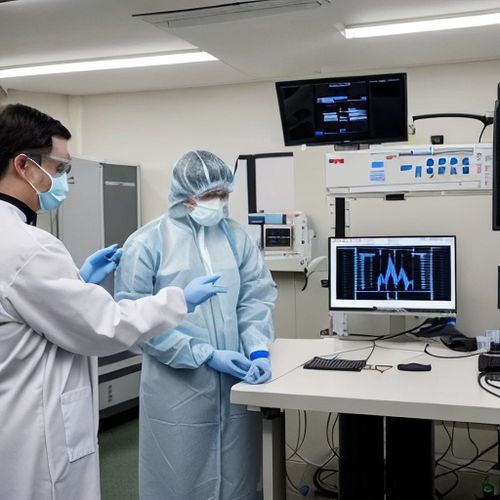
At its core, the NEOM medical city proposes to reinvent healthcare delivery through vertical integration never before attempted. Blueprints show adjacent research institutes working alongside specialty hospitals, with patient data flowing seamlessly from diagnostic AI systems to personalized treatment platforms. The project's most revolutionary aspect may be its planned "health data marketplace," where anonymized patient information would fuel pharmaceutical research—a controversial but potentially lucrative model. Early partnerships with Harvard Medical School and the German Aerospace Center suggest serious academic interest, though details remain scarce about how knowledge transfer will occur in practice.
Infrastructure Challenges in the Desert
The logistical hurdles of building a cutting-edge medical ecosystem in a remote desert region are becoming apparent. While $4.7 billion has been allocated just for water desalination and power infrastructure, engineers privately question whether renewable energy alone can sustain 24/7 operations of energy-intensive facilities like MRI centers and biotech labs. The recruitment challenge looms equally large: attracting 15,000 world-class medical professionals to a greenfield site requires more than tax incentives—it demands cultural adaptations that may clash with Saudi social norms. "You can't simply transplant Mayo Clinic into the Middle East without addressing fundamental lifestyle considerations," notes a Dubai-based healthcare consultant working on the project.
Economic Viability Concerns
The financial model raises eyebrows among health economists. With projections requiring 250,000 annual medical tourists by 2035 to break even—nearly double Qatar's current medical visitor numbers—some analysts see unrealistic assumptions about market capture. The Kingdom plans to offset costs through "premium wellness memberships" and patented technology licenses, but these revenue streams remain unproven at this scale. More troubling are the opportunity costs: this single project's budget equals six times Saudi Arabia's entire 2022 public health expenditure, leading some to ask whether basic healthcare access for Saudi citizens is being sacrificed for prestige.
Medical Ethics in the Gulf Context
The initiative's progressive medical ambitions exist in tension with Saudi Arabia's conservative legal framework. Plans for leading-edge fertility treatments and gender-specific care could conflict with religious guidelines, while proposed AI diagnostic systems must navigate strict data localization laws. International observers also question whether groundbreaking research conducted here will face publication restrictions or ethical oversight differences from Western institutions. "There's inherent contradiction in building a global biomedical hub while maintaining prohibitions on certain types of stem cell research," argues a bioethicist from King's College London who requested anonymity due to ongoing collaborations.
The Geopolitics of Health Dominance
Beyond medicine, the project reflects Saudi Arabia's strategic pivot toward soft power through healthcare leadership. By positioning NEOM as a neutral ground for Israeli-Arab medical cooperation and Global South vaccine production, the Kingdom aims to rebrand itself as a science diplomacy hub. This aligns with broader regional competition—the UAE's recently announced Abu Dhabi Biotech Free Zone appears designed to counter NEOM's ambitions. Whether the world needs dueling Gulf medical megaprojects remains an open question.
As construction cranes dot the Tabuk coastline, the ultimate test may be whether visionary architecture can overcome fundamental realities of healthcare economics and human behavior. If successful, NEOM could rewrite the rules of medical innovation. If not, it risks becoming the healthcare equivalent of a desert mirage—an impressive illusion that vanishes upon approach. For global health observers, Saudi Arabia's gamble represents either the future of medicine or its most expensive lesson in hubris.
By Daniel Scott/Apr 4, 2025
By James Moore/Apr 4, 2025
By Thomas Roberts/Apr 4, 2025
By Michael Brown/Apr 4, 2025
By William Miller/Apr 4, 2025
By Olivia Reed/Apr 4, 2025
By John Smith/Apr 4, 2025
By Emily Johnson/Apr 4, 2025
By Sarah Davis/Apr 4, 2025
By Natalie Campbell/Apr 4, 2025
By Ryan Martin/Apr 4, 2025

By Grace Cox/Feb 25, 2025

By Eric Ward/Feb 25, 2025
By Eric Ward/Feb 25, 2025
By Ryan Martin/Feb 25, 2025

By Victoria Gonzalez/Feb 25, 2025
By Jessica Lee/Feb 25, 2025
By David Anderson/Feb 25, 2025

By Ryan Martin/Feb 25, 2025