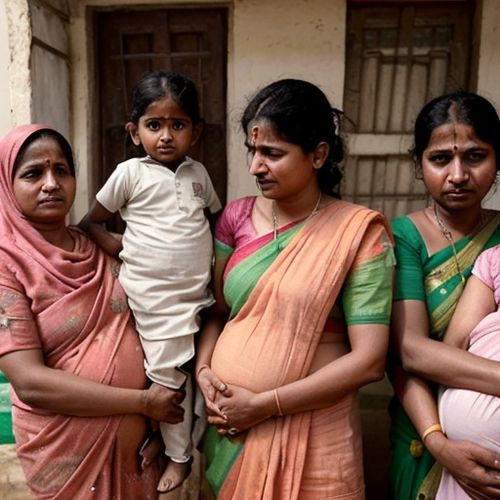
India's ambitious Ayushman Bharat-Pradhan Mantri Jan Arogya Yojana (AB-PMJAY), the world's largest government-funded healthcare program, has made significant strides in reducing maternal mortality rates since its 2018 launch. Recent data from the Ministry of Health and Family Welfare reveals a 22% decline in maternal deaths between 2018 and 2023, with the most dramatic improvements seen in traditionally underserved states like Uttar Pradesh and Bihar.
This progress comes as the scheme provides cashless coverage for maternal healthcare services to over 500 million beneficiaries, particularly targeting women in rural areas who previously faced catastrophic out-of-pocket expenses for childbirth and prenatal care.
The program's focus on institutional deliveries has been particularly transformative. By covering the full cost of hospital births, including emergency cesarean sections and neonatal care, AB-PMJAY has increased facility-based deliveries from 79% to 89% nationwide. This shift has been crucial in a country where, until recently, nearly half of all maternal deaths occurred during home births attended by untrained midwives. "The scheme has removed the financial barrier that forced many women to choose unsafe delivery options," explains Dr. Priya Sharma, a public health specialist at the All India Institute of Medical Sciences.
However, persistent gaps in healthcare infrastructure threaten to stall further progress. While urban centers boast well-equipped maternity hospitals, rural facilities often lack basic necessities - a 2023 audit found 38% of designated maternal health centers in Rajasthan lacked continuous electricity and 27% had no running water. The government has allocated $1.2 billion for infrastructure upgrades, but implementation delays mean many clinics still operate without adequate staffing or equipment. "Coverage means little if quality care isn't accessible," notes Meena Patel, a women's health advocate in Gujarat. "We need more specialists willing to work in village hospitals."
Cultural and educational barriers present additional hurdles. Despite the program's availability, UNICEF reports that 31% of women in high-mortality districts remain unaware of their entitlements under AB-PMJAY. Deep-rooted gender inequities compound the problem - in some regions, male family members still control healthcare decisions, sometimes prioritizing cost savings over maternal health. The government has responded with community outreach programs deploying accredited social health activists (ASHAs) to educate women about their rights, but changing centuries-old social norms requires sustained effort.
The program's next phase aims to address these challenges through expanded telehealth services and performance-based incentives for rural healthcare providers. Early pilots using mobile clinics in Odisha have shown promise, reducing maternal deaths by 40% in participating districts. As India works toward its Sustainable Development Goal of reducing maternal mortality to below 70 per 100,000 live births by 2030 (down from 97 in 2020), the world watches whether this massive experiment in healthcare democracy can deliver equally for women in Mumbai's slums and remote Himalayan villages alike.
By Daniel Scott/Apr 4, 2025
By James Moore/Apr 4, 2025
By Thomas Roberts/Apr 4, 2025

By Michael Brown/Apr 4, 2025

By William Miller/Apr 4, 2025
By Olivia Reed/Apr 4, 2025
By John Smith/Apr 4, 2025
By Emily Johnson/Apr 4, 2025

By Sarah Davis/Apr 4, 2025
By Natalie Campbell/Apr 4, 2025
By Ryan Martin/Apr 4, 2025

By Grace Cox/Feb 25, 2025

By Eric Ward/Feb 25, 2025

By Eric Ward/Feb 25, 2025
By Ryan Martin/Feb 25, 2025

By Victoria Gonzalez/Feb 25, 2025

By Jessica Lee/Feb 25, 2025

By David Anderson/Feb 25, 2025

By Ryan Martin/Feb 25, 2025