The Indian IPO market has recently overtaken Hong Kong in terms of activity, marking a significant shift in the Asian financial landscape. This development reflects broader economic trends, investor sentiment, and structural changes in both markets. While Hong Kong has long been a dominant hub for initial public offerings in Asia, India's surge highlights its growing appeal to both domestic and international investors. The reasons behind this shift are multifaceted, involving regulatory adjustments, macroeconomic conditions, and evolving market dynamics.
India's economic resilience and growth potential have been key drivers of its IPO market's outperformance. Unlike Hong Kong, which has faced headwinds from geopolitical tensions and a sluggish Chinese economy, India has maintained robust GDP growth. The country's young and expanding middle class, coupled with a booming digital economy, has attracted significant capital inflows. Companies in sectors such as technology, renewable energy, and consumer goods are increasingly looking to list in India, where valuations are more favorable compared to other emerging markets.
Regulatory reforms in India have also played a crucial role in boosting IPO activity. The Securities and Exchange Board of India (SEBI) has streamlined listing processes, making it easier for companies to go public. Stricter corporate governance norms and transparency requirements have further enhanced investor confidence. In contrast, Hong Kong's regulatory environment has become more uncertain due to Beijing's tightening grip over financial markets. The crackdown on Chinese tech giants and the broader regulatory scrutiny have dampened enthusiasm for listings in Hong Kong.
The shift in global investor preferences has further tilted the balance in India's favor. With China's economic slowdown and regulatory risks, many institutional investors are reallocating capital to India as a safer bet in emerging markets. India's strong domestic demand and relatively insulated economy provide a buffer against global volatility. Additionally, the Indian government's push for infrastructure development and manufacturing under the "Make in India" initiative has created new opportunities for businesses, making IPOs an attractive route for fundraising.
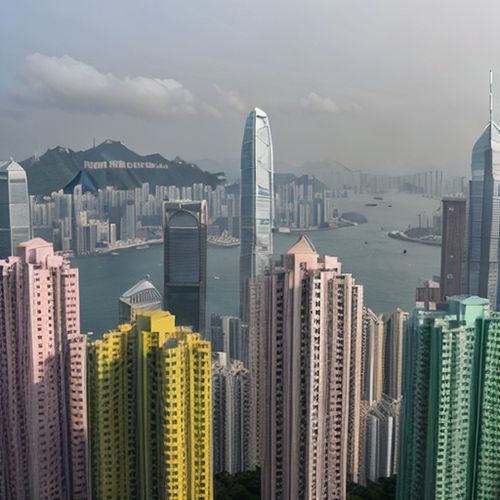
Hong Kong's declining appeal as a financial hub cannot be overlooked in this equation. The city's status as a gateway to China has been undermined by geopolitical tensions, particularly between the U.S. and China. Sanctions, capital controls, and a shrinking pool of international investors have eroded Hong Kong's IPO pipeline. Many Chinese firms that would have traditionally listed in Hong Kong are now exploring alternatives, including domestic listings in Shanghai or Shenzhen. This has left a void that India has been quick to fill.
The rise of India's startup ecosystem has also contributed to the IPO boom. Homegrown unicorns in fintech, e-commerce, and edtech are maturing and seeking public listings to raise capital and provide exits for early investors. The success of high-profile IPOs, such as those of Zomato and Nykaa, has set a precedent for other startups to follow. In contrast, Hong Kong's IPO market has been dominated by traditional industries, with fewer high-growth tech companies choosing to list there in recent years.
Currency stability and foreign investment flows have further bolstered India's IPO market. The Indian rupee has been relatively stable compared to other emerging market currencies, reducing exchange rate risks for foreign investors. The country's inclusion in global bond indices has also spurred foreign portfolio investment, creating a more liquid and dynamic capital market. Hong Kong, on the other hand, has seen capital outflows due to concerns over the Chinese yuan's volatility and capital controls.
The long-term implications of this shift are profound. If India sustains its current trajectory, it could cement its position as Asia's premier destination for IPOs, rivaling even Shanghai and Shenzhen. However, challenges remain, including bureaucratic red tape, infrastructure bottlenecks, and the need for further financial market reforms. For Hong Kong, reclaiming its IPO crown will require addressing geopolitical risks and restoring investor confidence in its role as a global financial center.
In conclusion, India's IPO market surpassing Hong Kong's is not just a fleeting trend but a reflection of deeper economic and geopolitical undercurrents. While India capitalizes on its growth story and regulatory improvements, Hong Kong must navigate a more complex landscape to regain its competitive edge. The coming years will be pivotal in determining whether this shift becomes a permanent feature of Asia's financial markets.
By Grace Cox/Apr 6, 2025

By Amanda Phillips/Apr 6, 2025

By Michael Brown/Apr 6, 2025

By William Miller/Apr 6, 2025

By Elizabeth Taylor/Apr 6, 2025

By Jessica Lee/Apr 6, 2025

By Olivia Reed/Apr 6, 2025

By Victoria Gonzalez/Apr 6, 2025

By Benjamin Evans/Apr 6, 2025
By Emma Thompson/Apr 6, 2025
By William Miller/Apr 6, 2025
By Grace Cox/Apr 6, 2025

By Benjamin Evans/Apr 6, 2025
By Jessica Lee/Apr 6, 2025

By Elizabeth Taylor/Apr 6, 2025

By David Anderson/Apr 6, 2025

By Elizabeth Taylor/Apr 6, 2025
By Joshua Howard/Apr 6, 2025
By Daniel Scott/Apr 6, 2025

By John Smith/Apr 6, 2025