The African fintech landscape has become a battleground for mobile payment supremacy, with two dominant players emerging as frontrunners: M-Pesa and Flutterwave. While both platforms facilitate digital transactions, their approaches, histories, and market penetrations tell vastly different stories about the future of financial inclusion on the continent.
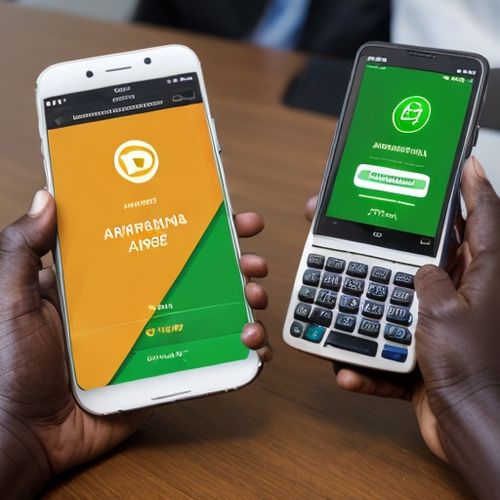
M-Pesa, launched in 2007 by Safaricom in Kenya, revolutionized mobile money transfers in regions with limited banking infrastructure. What began as a simple SMS-based money transfer service grew into a financial ecosystem supporting loans, savings, and merchant payments. Its dominance in East Africa remains unchallenged, with over 50 million active users across seven countries. The platform's success lies in its understanding of local contexts - it doesn't require smartphones or constant internet access, making it accessible to Africa's unbanked populations.
In contrast, Flutterwave represents the new generation of African fintech. Founded in 2016 by Nigerian entrepreneurs, it positioned itself as a payment infrastructure for global merchants and African businesses. Unlike M-Pesa's closed ecosystem, Flutterwave integrates with existing banking systems and international payment processors like Visa and Mastercard. Its API-first approach allows businesses to embed payments into their operations easily, catering to Africa's growing e-commerce sector and tech-savvy urban populations.
The competitive dynamics between these two models reveal fundamental differences in vision. M-Pesa built its empire on person-to-person (P2P) transfers and mobile wallet dominance, while Flutterwave focuses on business-to-business (B2B) and business-to-consumer (B2C) transactions. This distinction reflects their origins - M-Pesa emerged from a telecom company solving grassroots financial needs, whereas Flutterwave was conceived by tech entrepreneurs eyeing pan-African digital commerce.
Market expansion strategies further highlight their divergent paths. M-Pesa grew through strategic partnerships with mobile network operators, replicating its Kenya success in Tanzania, Mozambique, and other East African markets. Flutterwave took a different route, obtaining licenses in multiple countries simultaneously and building infrastructure that works across borders from inception. This approach enabled rapid expansion to over 30 African countries within five years, though with varying degrees of market penetration.
Technological capabilities present another area of contrast. M-Pesa's USSD and SIM card-based technology, while revolutionary for its time, now faces limitations in supporting complex financial products. Flutterwave's cloud-based infrastructure offers more flexibility for innovation but requires better internet connectivity. This technological divide mirrors Africa's own infrastructure disparities between urban and rural areas.
Regulatory challenges shape both companies differently. M-Pesa benefits from early-mover advantage in markets where regulators designed mobile money policies around its model. Flutterwave navigates more complex regulatory environments as it bridges traditional banking systems with new payment technologies across multiple jurisdictions. Recent licensing hurdles in Kenya, M-Pesa's home turf, demonstrate the political economy dimensions of this competition.
The customer base dichotomy tells an important story. M-Pesa serves predominantly low-income individuals and small merchants, with an average transaction value of $30. Flutterwave's transactions average nearly $200, reflecting its focus on larger businesses and international payments. This segmentation suggests the platforms may coexist serving different market segments rather than engaging in direct competition.
Partnership strategies reveal how each company leverages ecosystems. M-Pesa integrates with local merchants, utility companies, and even governments for services like tax payments. Flutterwave collaborates with global tech firms including Alibaba, Uber, and Microsoft to facilitate cross-border payments. These partnerships underscore their different value propositions - local market depth versus global connectivity.
Investment and valuation trajectories highlight market confidence in both models. M-Pesa contributes significantly to Safaricom's market capitalization, which exceeds $10 billion. Flutterwave achieved unicorn status in 2021 with a valuation over $1 billion, attracting international investors. The funding landscape suggests investors see room for multiple successful models in Africa's fragmented markets.
Innovation pipelines indicate future directions. M-Pesa develops adjacent services like Fuliza (overdraft facility) and M-Shwari (savings and loans) to deepen financial inclusion. Flutterwave builds tools for online businesses including storefront solutions and working capital financing. These innovations suggest converging strategies - M-Pesa moving upmarket while Flutterwave expands downstream.
The workforce behind these platforms reflects their DNA. M-Pesa employs thousands of agents across neighborhoods and villages - a human network critical for cash-in/cash-out operations. Flutterwave maintains a lean tech team focused on product development and enterprise sales. This human infrastructure difference may prove decisive in last-mile delivery versus scalability.
Macroeconomic factors influence both players differently. Currency volatility affects Flutterwave's cross-border business more acutely, while M-Pesa's domestic focus provides some insulation. However, inflation and unemployment drive more users to M-Pesa's basic services even as they limit growth in Flutterwave's target SME sector.
Looking ahead, the competition may evolve into collaboration. Some industry observers predict convergence between telecom-led mobile money and fintech payment solutions. Strategic partnerships or even mergers could create hybrid models combining M-Pesa's extensive reach with Flutterwave's technical capabilities. Such developments would mirror global trends where traditional finance and tech increasingly intersect.
The ultimate winner in this contest may be Africa's consumers and businesses. As M-Pesa and Flutterwave push each other to innovate, expand, and improve services, they collectively advance financial inclusion across the continent. Their competition demonstrates that Africa's fintech revolution will accommodate multiple successful models tailored to different markets, customer segments, and use cases.
What remains certain is that mobile payments will continue transforming African economies. Whether through M-Pesa's grassroots penetration or Flutterwave's digital bridges, the movement of money becomes easier, faster, and more accessible. This progress, more than any corporate victory, represents the true promise of Africa's fintech evolution.
By Grace Cox/Apr 6, 2025

By Amanda Phillips/Apr 6, 2025

By Michael Brown/Apr 6, 2025
By William Miller/Apr 6, 2025
By Elizabeth Taylor/Apr 6, 2025

By Jessica Lee/Apr 6, 2025

By Olivia Reed/Apr 6, 2025

By Victoria Gonzalez/Apr 6, 2025

By Benjamin Evans/Apr 6, 2025

By Emma Thompson/Apr 6, 2025

By William Miller/Apr 6, 2025
By Grace Cox/Apr 6, 2025
By Benjamin Evans/Apr 6, 2025
By Jessica Lee/Apr 6, 2025

By Elizabeth Taylor/Apr 6, 2025

By David Anderson/Apr 6, 2025

By Elizabeth Taylor/Apr 6, 2025

By Joshua Howard/Apr 6, 2025
By Daniel Scott/Apr 6, 2025

By John Smith/Apr 6, 2025