The once-unstoppable march toward electric vehicle dominance in North America has hit an inflection point, prompting Germany's automotive titans to recalibrate their approaches. Volkswagen, BMW, and Mercedes-Benz are quietly rewriting their playbooks as consumer demand patterns diverge sharply from earlier projections. What began as a wholesale transition to battery-powered fleets now appears more nuanced, with hybrid technologies and ICE model lifecycles gaining unexpected reprieves.
Volkswagen Group finds itself at a strategic crossroads. The automaker's ambitious $7 billion commitment to build a dedicated EV plant in Canada now appears less certain as executives debate whether to stagger the rollout or pivot toward retooling existing facilities. "The North American consumer isn't adopting EVs at the rate we'd anticipated," confided a senior Wolfsburg-based executive who requested anonymity. "Our Chattanooga ID.4 production lines are running at barely 60% capacity while dealers beg for more Tiguan allocations."
Mercedes-Benz's conspicuous retreat from its "EV-only by 2030" pledge signals deeper industry recalibration. The luxury marque recently extended production cycles for its GLE and GLS SUVs while quietly developing a next-generation hybrid system for its high-margin S-Class sedans. "The market spoke clearly - our clients want choice, not mandates," remarked the brand's U.S. CEO during a recent dealer council meeting. This pragmatism extends to postponed investments in Alabama-based battery facilities as the company reallocates resources toward plug-in hybrid variants of its best-selling models.
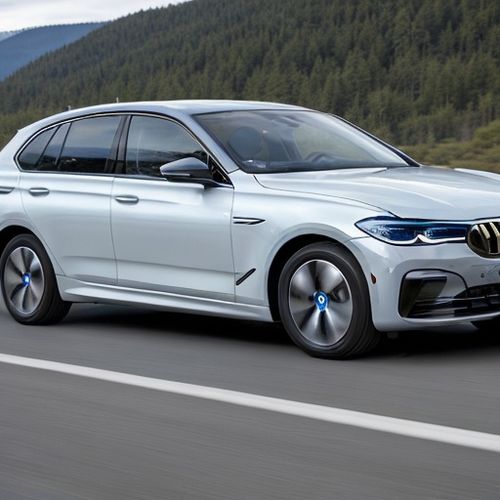
BMW's strategy reveals perhaps the most surgical adaptation. Rather than abandoning its Neue Klasse platform development, the Munich-based automaker is accelerating work on flexible architectures that can accommodate hydrogen fuel cells alongside traditional EV configurations. "We're seeing particular interest in alternative powertrains from our coastal dealers," noted BMW North America's product planning chief. The company's Spartanburg plant continues to churn out X5 and X7 models at record volumes while engineers work overtime to adapt the CLAR platform for extended plug-in hybrid ranges.
Behind these tactical shifts lies a fundamental reassessment of North America's energy infrastructure realities. Charging network reliability concerns, coupled with stubborn electricity price disparities across regions, have created what one Detroit-based analyst calls "the great EV hesitation." German automakers now openly acknowledge that the U.S. and Canada may follow different adoption curves than Europe or China, requiring tailored product strategies rather than global mandates.
The financial implications are already materializing. Volkswagen Group recently revised its 2025 North American margin targets downward by 1.8 percentage points, while Mercedes-Benz diverted €400 million from battery R&D toward combustion engine efficiency programs. Even as these adjustments occur, all three automakers maintain they're not abandoning electrification - rather, they're adapting to market realities. "This isn't a retreat," insisted a BMW board member, "it's about meeting customers where they are while keeping our technological edge."
Dealer networks emerge as unexpected winners in this recalibration. After years of being told to prepare for an all-EV future, retailers now report manufacturers becoming more receptive to inventory mix requests. "Suddenly they're asking what we need rather than telling us what we'll get," remarked a Texas-based dealer principal representing all three German brands. This newfound flexibility extends to training programs, with factory support shifting from pure EV certification toward hybrid technology specialists.
Supply chain implications are equally profound. German automakers are renegotiating battery material contracts, with several lithium suppliers confirming delayed volume commitments. Simultaneously, traditional powertrain component manufacturers report unexpected contract extensions. "We were planning to retool our Michigan plant for battery enclosures," shared a senior executive at a major supplier, "now we're upgrading our transmission lines instead."
The political dimension adds further complexity. With the U.S. presidential election looming and EV incentive structures potentially in flux, German automakers are building unprecedented scenario-planning teams. "We need to model outcomes ranging from expanded tax credits to complete policy reversals," explained a VW Group government relations specialist. This political uncertainty reinforces the strategic value of maintaining manufacturing flexibility across powertrain technologies.
As the industry watches Tesla's response to slowing growth and Chinese automakers' export ambitions, Germany's premium brands appear determined to chart a middle course. Their revised North American strategies suggest a future where electrification progresses unevenly across regions and segments, with hybrid technologies serving as bridges rather than afterthoughts. The coming months will reveal whether this pragmatic approach represents temporary course correction or a fundamental reimagining of the automotive transition timeline.
By Grace Cox/Apr 6, 2025
By Amanda Phillips/Apr 6, 2025

By Michael Brown/Apr 6, 2025
By William Miller/Apr 6, 2025
By Elizabeth Taylor/Apr 6, 2025
By Jessica Lee/Apr 6, 2025

By Olivia Reed/Apr 6, 2025
By Victoria Gonzalez/Apr 6, 2025

By Benjamin Evans/Apr 6, 2025
By Emma Thompson/Apr 6, 2025

By William Miller/Apr 6, 2025
By Grace Cox/Apr 6, 2025

By Benjamin Evans/Apr 6, 2025
By Jessica Lee/Apr 6, 2025

By Elizabeth Taylor/Apr 6, 2025

By David Anderson/Apr 6, 2025
By Elizabeth Taylor/Apr 6, 2025

By Joshua Howard/Apr 6, 2025

By Daniel Scott/Apr 6, 2025

By John Smith/Apr 6, 2025