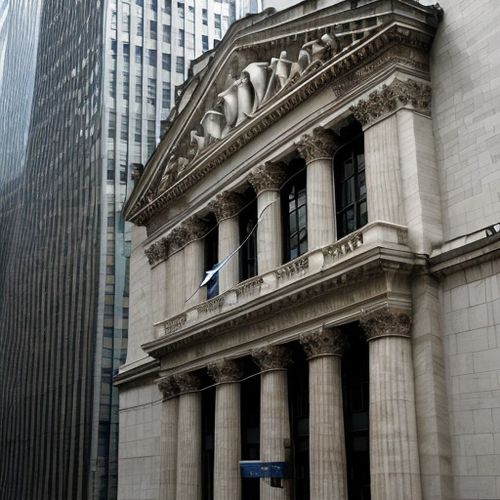
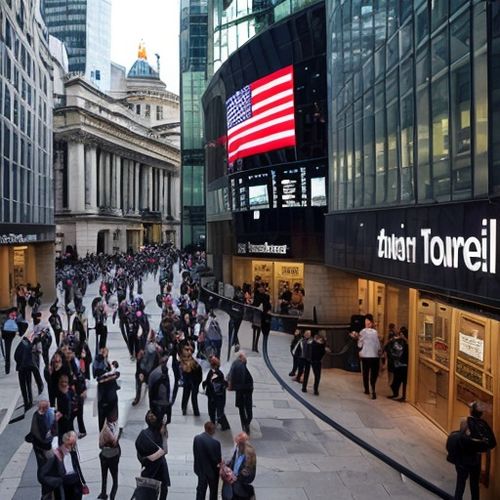
The recent restructuring of Goldman Sachs' investment banking division has sent ripples through Wall Street, serving as a bellwether for broader shifts in global financial markets. As one of the most influential players in the industry, Goldman's strategic pivot reflects deeper currents reshaping the landscape of high finance – from the retreat of pandemic-era dealmaking bonanzas to the resurgence of old-school advisory work in an era of economic uncertainty.
A Retreat from the SPAC Frenzy
The bank's decision to wind down its dedicated SPAC (Special Purpose Acquisition Company) team speaks volumes about the cooling appetite for blank-check companies. Just two years ago, SPACs were the darlings of Wall Street, with Goldman at the forefront of underwriting these speculative vehicles. The abrupt pullback mirrors a market that has grown wary of financial engineering amid rising interest rates and regulatory scrutiny. What began as a flood of SPAC IPOs has dwindled to a trickle, leaving banks to reassess their exposure to this once-lucrative but now problematic business line.
The Private Equity Reckoning
Goldman's consolidation of its private equity coverage teams coincides with a dramatic slowdown in leveraged buyout activity. The era of cheap debt that fueled PE firms' acquisition sprees appears to be over, at least for now. With financing costs rising and portfolio companies showing strain, the investment bank is adjusting its resources to match the new reality. This recalibration suggests that the golden age of private equity may be giving way to a period of portfolio triage and operational focus rather than aggressive dealmaking.
Technology Banking's Changing Fortunes
Perhaps most telling is the bank's reshuffling of its technology banking group. After years of dominance by Silicon Valley's growth-at-all-costs mentality, Goldman appears to be betting that the next phase of tech finance will favor sustainable business models over speculative growth stories. The reorganization merges previously separate teams covering public and private tech companies – a structural change that acknowledges how the valuation gap between public and private markets has narrowed dramatically in the current environment.
The moves come as Goldman Sachs joins other Wall Street firms in responding to a deal drought that has persisted longer than many anticipated. After the record-breaking activity of 2021, investment banking revenues across the industry have fallen sharply. What makes Goldman's response noteworthy is its willingness to make structural changes rather than temporary cuts – suggesting leadership views these market shifts as more than just a cyclical downturn.
The Return of Traditional Advisory
Buried within the restructuring is a quiet renaissance for Goldman's traditional strengths: complex mergers and restructuring advisory. As companies grapple with higher capital costs and economic uncertainty, the bank appears to be doubling down on its historic expertise in navigating turbulent waters. This shift back to basics reflects a market where financial engineering has lost some luster and operational fundamentals matter again.
The reorganization also hints at how Goldman views the geopolitical landscape. By combining industry coverage across regions rather than maintaining separate geographic silos, the bank seems to be preparing for a world where multinational corporations need integrated advice that spans borders and regulatory regimes. In an era of supply chain reconfiguration and economic nationalism, this approach may prove prescient.
Personnel Shifts Tell Their Own Story
The human dimension of the restructuring reveals much about where Goldman sees future growth. The promotion of several restructuring specialists to key leadership roles signals anticipation of more distressed situations ahead. Meanwhile, the bank has been quietly building out its capabilities in sectors like energy transition and infrastructure – areas likely to benefit from government spending programs and the rewiring of global energy markets.
What emerges from Goldman's reorganization is a blueprint for investment banking in an era of higher interest rates, geopolitical tension, and technological disruption. The playbook of the past decade – predicated on cheap money fueling financial engineering – appears to be giving way to a new paradigm where fundamentals matter more than financial alchemy.
Other Wall Street firms will undoubtedly study Goldman's moves closely. As the most profitable investment bank over the long term, Goldman Sachs has historically been adept at navigating turning points in financial markets. Its current restructuring may well be remembered as an early indicator of how the industry adapted to the end of the zero-interest-rate era.
The changes also raise questions about whether this marks a temporary retrenchment or a more permanent reconfiguration of investment banking's priorities. With technological disruption accelerating across finance and traditional revenue streams under pressure, Goldman's reorganization might represent just the first of many structural shifts to come in the industry.
Ultimately, the restructuring reflects a simple truth: investment banking remains a cyclical business, but the cycles themselves are changing. The factors driving today's deals – geopolitical risk, energy transition, technological maturation – differ markedly from those that dominated the previous decade. In reshuffling its teams and priorities, Goldman Sachs isn't just reacting to current market conditions but attempting to position itself for where the next wave of financial activity will emerge.

By Grace Cox/Apr 6, 2025

By Amanda Phillips/Apr 6, 2025

By Michael Brown/Apr 6, 2025
By William Miller/Apr 6, 2025

By Elizabeth Taylor/Apr 6, 2025

By Jessica Lee/Apr 6, 2025

By Olivia Reed/Apr 6, 2025

By Victoria Gonzalez/Apr 6, 2025

By Benjamin Evans/Apr 6, 2025

By Emma Thompson/Apr 6, 2025
By William Miller/Apr 6, 2025
By Grace Cox/Apr 6, 2025

By Benjamin Evans/Apr 6, 2025

By Jessica Lee/Apr 6, 2025
By Elizabeth Taylor/Apr 6, 2025
By David Anderson/Apr 6, 2025

By Elizabeth Taylor/Apr 6, 2025

By Joshua Howard/Apr 6, 2025
By Daniel Scott/Apr 6, 2025

By John Smith/Apr 6, 2025